Last updated: 19 October 2026 · 7 min read
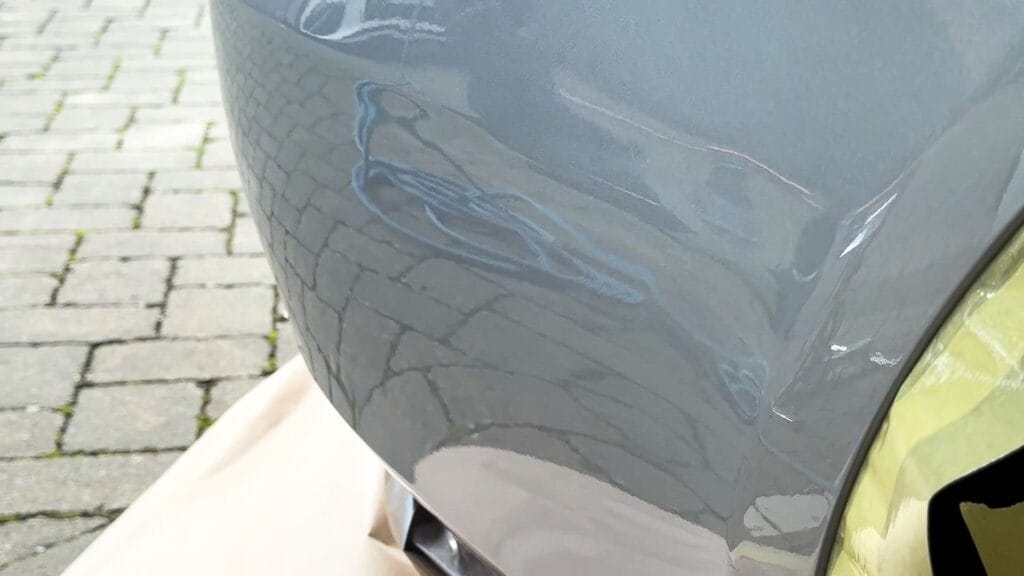
It is a familiar British scene: a car-park door ding, a kerbed alloy, a scuffed bumper after a low-speed nudge. The damage looks minor. The financial decision that follows often is not.
Many drivers still treat insurance as the default. For serious collisions that is often right. For everyday cosmetic damage, claiming can mean paying a sizeable excess, losing part of a hard-earned no-claims discount, and carrying a higher premium for years. That long-tail cost can dwarf the repair itself. Mobile SMART (Small to Medium Area Repair Technology) repair, fixing only the damaged area at your home or work, is often the cheaper, lower-risk option.
The short version
For a typical scuffed bumper or panel scratch, claiming on insurance costs around £670 to £690 over three to five years once you add a £450 excess and a modest premium rise. A Washdoctors mobile scratch repair averages £340, and your premium stays where it is.
Paying a bodyshop privately avoids the claim, but costs more: £363 to £669 for a single panel respray, and £800 to £2,000 when the damage spans several panels. A multi-area mobile repair often costs around half that.
Serious or structural damage should still go through your insurer and a bodyshop. For minor cosmetic damage, get a repair quote and compare it with your excess before you claim.
Motoring and repair costs are still under pressure
The Office for National Statistics’ CPI annual rate for vehicle maintenance and repairs was 5.5% in August 2026, after averaging 6.3% across 2025, 7.0% in 2024 and 8.0% in 2023.
The Association of British Insurers (ABI) reported that of £2.9 billion paid in motor claims in Q1 2026, £1.9 billion was for vehicle repairs, with the average accidental-damage claim at £3,699 (up 8% quarter on quarter). By Q2 2026 the ABI’s average motor claim payout overall had reached £4,900. Thatcham Research has reported that the average cost to repair a vehicle after a collision rose by 50% between 2019 and 2024.
The ABI’s tracker put the average premium actually paid at £566 in Q2 2026 (£564 for full-year 2025). Confused.com’s Car Insurance Price Index (WTW) put the average comprehensive quote at £713 in September 2026, down from a £995 peak in December 2023.
Why a small claim can cost more than the repair
Almost every comprehensive policy combines a compulsory excess with a voluntary excess. Finder’s quote sample for a typical mid-30s driver found most compulsory excesses around £150 to £250. Comparison sites commonly default the voluntary excess to around £250, so a combined £400 to £500 is commonplace.
A no-claims discount (NCD) can be worth hundreds of pounds. The ABI notes discounts can be as much as 30% after one claim-free year and 60% after five. MoneySuperMarket’s August 2026 median sold prices show drivers with no NCD paying £1,138.77 for comprehensive cover, against £584.35 with five years’ NCD. Protected NCD keeps the discount percentage within policy limits but, as MoneySuperMarket and Which? both stress, it does not protect the underlying premium.
Compare the Market advises drivers to expect roughly a 20% to 50% premium increase after making a claim. Using its quote data, it illustrated a 20% rise taking an average premium from £606 to £727. Claims history is routinely declared for five years.
A lot of drivers don’t have protected no-claims or a clean no-fault route for a car-park scrape. Once they claim, they’re paying the excess, losing discount, and paying more at renewal for years. For minor cosmetic damage, that long-tail cost is usually far bigger than just getting it fixed on the driveway.
Will Mapstone, founder, Washdoctors
What mobile repairs actually cost
Washdoctors handles thousands of repair requests every year. Over the last 12 months the overall average repair cost was £342. Here is how that breaks down by service, using average order value (what customers actually paid per job).
| Service | Share of jobs | Average cost |
|---|---|---|
| Scratch repair (often more than one panel, e.g. bumper corner plus door) | 42% | £340 |
| Alloy wheel repair (single wheels and full sets) | 16% | £242 |
| All-in repairs (combined body and wheel work) | 13% | £670 |
| Dent repair | 12% | £437 |
| Cleaning and detailing | 10% | £243 |
| Lease return preparation (may include wheels, valeting and body repairs) | 7% | £605 |
Mobile vs bodyshop vs claiming
| Typical cost | Time | Effect on premium | |
|---|---|---|---|
| Mobile SMART repair | Scratch average £340; overall average £342 | A few hours on your driveway | None |
| Bodyshop, paying privately | Single panel £363 to £669; several panels £800 to £2,000 | Days off the road | None |
| Insurance claim | Excess often £400 to £500 | Insurance repairs averaged around 30 days (Aug 2025) | Typically 20% to 50% higher; declared for 5 years |
Scratch repair is our largest category (42% of jobs, average £340). That average often covers more than one panel, such as a bumper corner plus a door, so it is not a like-for-like single-scratch price. It is still below what most bodyshops charge to respray a single panel, and below a typical £400 to £500 excess before any premium impact.
What a bodyshop charges when the damage spans several panels
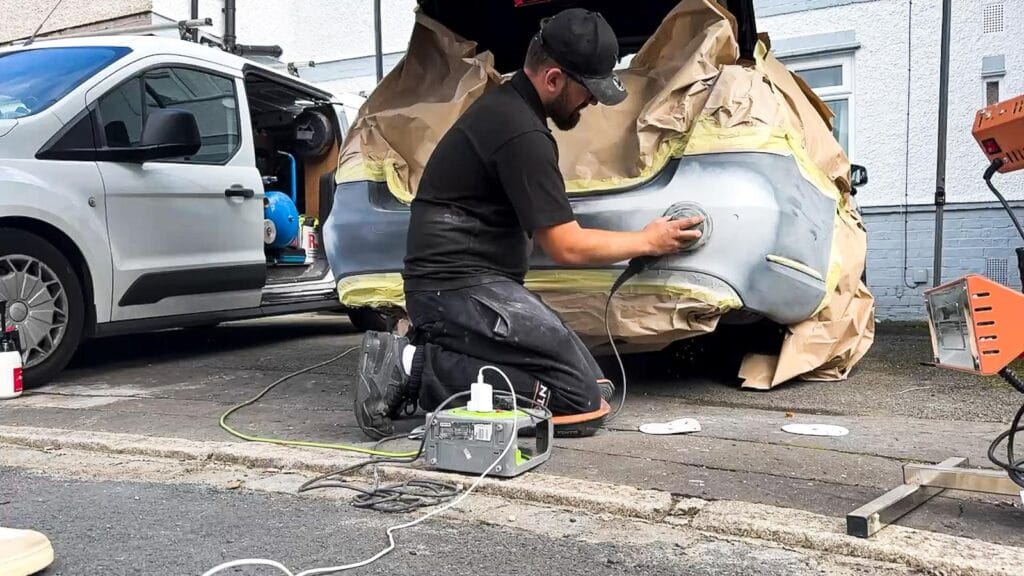
Most cosmetic damage is not one neat scratch. A scrape along the side of the car, a reversing nudge that catches the bumper and the rear quarter, or a keyed door usually touches two, three or four panels. This is where bodyshop prices climb fastest.
| Bodyshop job | Typical UK price |
|---|---|
| Bumper respray | £280 to £290 |
| Single panel respray (door, wing, quarter) | £363 to £669 |
| Several panels or a half respray | £800 to £2,000 |
| Full respray | £1,500 to £3,000+ |
Two things push a multi-panel bodyshop bill up. The first is that bodyshops usually respray the whole panel, even when the damage covers a small part of it. The second is blending: to hide the join, the painter carries the new colour into the neighbouring undamaged panels, especially on metallic and pearl finishes. So a scrape across a bumper and two doors can end up being paid for as four or five panels’ worth of preparation, paint and labour, plus days with the car off the road.
Mobile SMART repair works the other way round: it repairs and refinishes only the damaged area on each panel, and does all of them in one visit. Our all-in repair jobs, which combine several areas of body and wheel work, average £670. That is roughly half the middle of the £800 to £2,000 bodyshop range for several panels. It is the comparison our customers most often ask us about, and the one where the difference is biggest.
To be fair to bodyshops: if a panel is cracked, torn, badly creased or needs replacing, or the damage covers most of a panel’s surface, a full panel respray in a booth is the right repair. Mobile SMART repair is for cosmetic damage, and our technicians will tell you if your car needs a bodyshop instead.
Dent repair (average £437) and all-in repairs (average £670) remain far below the ABI’s £3,699 average accidental-damage claim. Alloy repair (average £242) sits above the RAC’s £80 to £130 average for a single-wheel refurbishment because our figure mixes single wheels and full sets.
For structural and major collision work, a bodyshop remains the right route. For cosmetic jobs, workshop visits often mean days without the car. Activate Group, citing Trend Tracker data, put average insurance repair cycle times at around 30 days in August 2025. Mobile SMART repairs are typically completed in a few hours on site. If you want to know how the finish compares, read is mobile dent repair as good as a bodyshop?
Worked example: claim vs mobile repair over 3 to 5 years
An illustrative scenario: a scuffed bumper and a light panel scratch. Individual quotes vary.
Assumptions
- Baseline annual premium: £584 (MoneySuperMarket August 2026 median, five years’ NCD), NCD not protected.
- Combined excess: £450 (a typical compulsory excess plus a common £250 voluntary default).
- Mobile repair: £340 (Washdoctors scratch repair average).
- Private bodyshop: around £500 for a single-panel respray (middle of the £363 to £669 range).
- If claiming: pay the £450 excess, a 20% premium rise in year one (the lower end of Compare the Market’s 20% to 50% guidance), then a stepped return towards the baseline over years two to five as NCD rebuilds.
- No courtesy car or time off work included.
| Route | What you pay | Cost over 3 to 5 years |
|---|---|---|
| A. Mobile scratch repair | £340; premium unchanged | About £340 |
| B. Bodyshop, paying privately | Around £500 plus days without the car; premium unchanged | About £500 (£800+ if a second panel is involved) |
| C. Insurance claim | £450 excess plus about £117 extra premium in year one, then smaller extras as NCD rebuilds | About £669 over 3 years; £691 over 5 years |
On these assumptions, paying for a typical Washdoctors scratch repair is about £350 cheaper over five years than claiming. A 30% to 50% premium rise would widen that gap.
Some caveats. Fully recovered non-fault claims may preserve your NCD years, although premiums can still rise. Protected NCD preserves the discount percentage, not the price. And serious or structural damage should still go through your insurer and a bodyshop.
Got a scratch, scuff or dent? Upload a few photos and we will come back with the best three quotes from local technicians. You only pay a deposit to secure the one you choose.
Lease returns: charges often exceed a pre-return tidy-up
Most UK contract-hire and leasing firms assess returns against the British Vehicle Rental and Leasing Association (BVRLA) Fair Wear and Tear standard. Under that guide, surface scratches up to 25mm (with no primer or bare metal showing), small dents within stated limits with unbroken paint, and alloy scuffs totalling up to 50mm of the wheel circumference are typically treated as fair wear. Damage beyond those tolerances can attract end-of-lease charges. The BVRLA advises drivers to appraise the car 10 to 12 weeks before return and to repair unacceptable damage professionally beforehand.
Fleet News’ FN50 research found the average fair wear and tear charge on company cars rose 14% to a record £421 in 2025, with 48% of cars attracting charges (individual lessor averages ranged from £153 to £894). Published lessor price lists show how quickly minor items add up. Arval’s June 2026 car damage charge matrix lists £161 to refinish a body panel where primer or bare metal is showing, £96 for an equivalent bumper scratch, £213 to repair and refinish a chargeable dent, and £72 to £144 per alloy depending on the extent of scuffing or corrosion.
Our lease return preparation jobs average £605 and can combine wheels, valeting and body repairs in one visit. That is higher than the FN50 average charge because it is a full pre-return preparation, not a single line item. It is designed to cut the risk of stacked charges and a surprise invoice after collection. VW Financial Services’ own damage guide likewise prices alloy refurbishment and bumper repairs as separate end-of-contract charges, so paying for targeted mobile work before handover is a rational comparison, not a vanity spend.
Frequently asked questions
Will a mobile repair always be cheaper than my excess?
Not always, but often. Our scratch (£340), alloy (£242) and overall (£342) averages are often below a £400 to £500 total excess. Always compare a written quote with your excess, and check whether your NCD is protected.
How much does a bodyshop charge to repair several panels?
Typically £800 to £2,000 for several panels or a half respray, against £363 to £669 for a single panel. Blending colour into neighbouring panels adds to the bill, especially on metallic paint. For cosmetic damage across several panels, a mobile SMART repair that refinishes only the damaged areas often costs around half as much.
If I pay privately, do I still need to tell my insurer?
Report incidents if your policy requires it. Reporting an incident without claiming is different from submitting a claim for payment. Non-disclosure can invalidate your cover.
Should I repair damage before a lease return?
The BVRLA says you may repair damage outside fair wear and tear before return, provided the work is professional and warrantied. Compare a mobile quote with your lessor’s damage charges. In 2025 the average charge was £421 and 48% of company cars were charged (FN50).
How long does a mobile repair take?
Many single-area jobs take a few hours on your driveway or at work. Insurance collision repairs have recently averaged around a month.
This article is general information, not financial advice. Washdoctors figures are company data from the last 12 months. Industry figures were researched in October 2026.
Sources
- ABI: Q1 2026 motor premiums and repair costs
- ABI: Q2 2026 motor claims payouts
- ABI: 2025 motor payouts and average premium
- ONS: CPI maintenance and repair of personal transport equipment (D7IP)
- Confused.com: Car Insurance Price Index
- MoneySuperMarket: No-claims discount guide
- Compare the Market: Will an accident affect next year’s premium?
- Which?: No-claims bonuses explained
- Finder: Compulsory vs voluntary excess
- Thatcham Research: Collision repair costs 2019 to 2024
- Activate Group / Trend Tracker: Repair cycle times
- RAC Drive: How much does it cost to respray a car? (WhoCanFixMyCar data, July 2026)
- WhoCanFixMyCar: How much does it cost to respray a car?
- WeSprayAnyCar: Car respray cost guide (2026)
- RAC Drive: Alloy wheel refurbishment costs
- BVRLA: Returning your leased vehicle
- Fleet News FN50: Fair wear and tear charges hit record high
- Arval: Car damage charge matrix (June 2026)
- VW Financial Services: Damage guide
- Washdoctors company data (last 12 months): average repair £342; lowest bodywork repair £180; highest £1,600.