

Contents
- Quick answer
- What is a single stage paint correction?
- What defects does single stage correction remove?
- How much improvement should you expect?
- Single stage vs multi-stage paint correction
- Who should choose a single stage correction?
- When is single stage not enough?
- Why preparation matters more than polishing
- Why protection after correction is essential
- How long does a single stage paint correction take?
- How much does single stage paint correction cost?
- Is single stage paint correction worth it?
- Should you upgrade to ceramic coating?
- Book paint correction with Washdoctors
- Single Stage Paint Correction FAQs
- Author: Peter Marsh
Single stage paint correction removes swirl marks, micro scratches, light etching, and surface haze using machine polishing, restoring gloss and clarity to your car’s clear coat. It delivers a major visual improvement, but it won’t fully remove deep defects or achieve a perfect finish.
Most cars don’t need multi-stage correction, they need proper polishing done once, properly.
What is a single stage paint correction?
A single stage paint correction uses one round of machine polishing to improve the condition of your car’s paint.
It works on the clear coat — the transparent protective layer over your paint — removing surface defects and restoring its depth and gloss. The goal is to remove the majority of visible defects safely, without overworking the paint.
What does the process involve?
A proper service includes:
- Full exterior valet and preparation
- Decontamination wash to remove embedded contamination
- Machine polishing across all painted surfaces
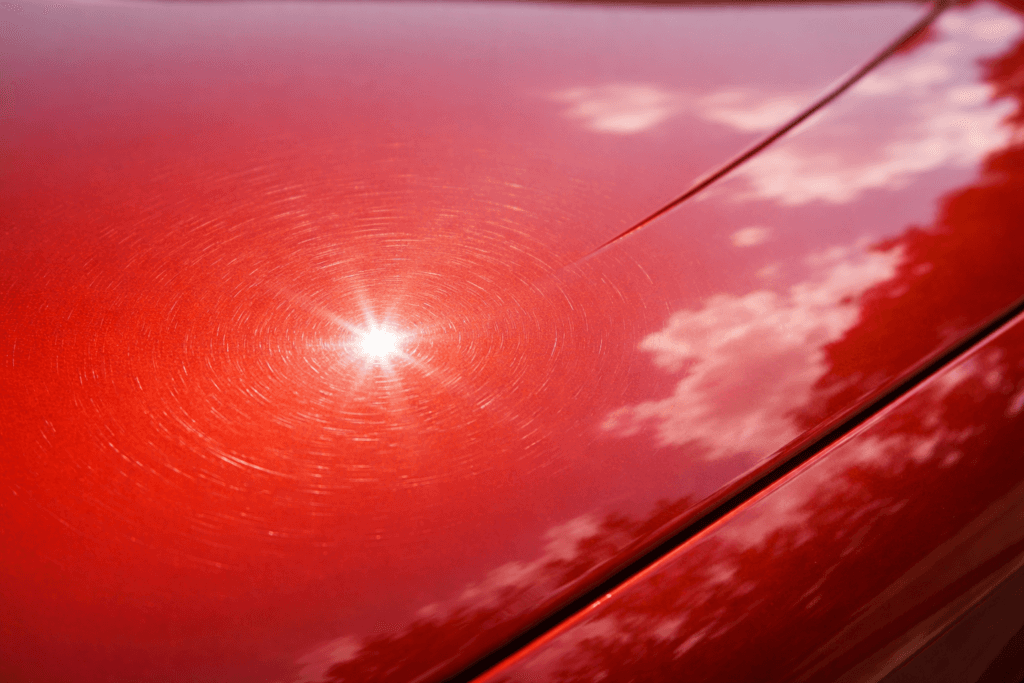
- Removal of swirl marks, micro scratches, and light etching
- Refinement of gloss, clarity, and depth in the clear coat
- Application of protective coating
If the preparation isn’t done properly, the polishing stage won’t deliver consistent results.
What defects does single stage correction remove?
Single stage correction is designed for light to moderate defects that sit within the clear coat and affect how the paint looks in everyday conditions.
What it can fix
- Swirl marks from poor washing technique
- Micro scratches from general daily use
- Light etching from bird droppings, tree sap, or acid rain
- Water spot etching from mineral deposits
- General dullness or haze in the clear coat
- Loss of gloss from UV exposure
What it won’t fully fix
- Deep scratches you can feel with your fingernail
- Etching that has eaten through the clear coat into the base coat
- Heavy oxidation or severe paint damage
- Poor previous machine polishing work
Will Mapstone, Washdoctors:
“A single stage improves most cars massively, but it’s not about perfection. It’s about getting the biggest visual gain without overworking the paint.”
How much improvement should you expect?
A single stage paint correction typically removes 60–80% of visible defects, depending on the paint condition.
That level of correction is enough to completely change how the car looks in most cases.
What that actually means
- Swirl marks and micro scratches become far less visible
- Etching from environmental contamination is significantly reduced
- Reflections look clearer and sharper
- Colour looks deeper and richer
- The car looks clean even in direct sunlight
Most cars go from looking tired and flat to looking properly maintained.
Single stage vs multi-stage paint correction
The difference isn’t just how much correction you get, it’s how far you go in chasing perfection.
Comparison
| Factor | Single Stage Correction | Multi-Stage Correction |
|---|---|---|
| Visual result | Major improvement, paint looks clean, glossy and well maintained | Near-perfect finish, defects heavily reduced even under direct light |
| Defect removal | ~60–80% of visible defects removed | ~80–95%+ defect removal |
| Swirl marks & micro scratches | Significantly reduced | Heavily reduced or eliminated |
| Etching | Light etching removed; deep etching may remain | More aggressive etching removal possible |
| Clear coat impact | Minimal removal, preserves clear coat thickness | More clear coat removed — more correction, more risk |
| How the car looks day-to-day | Looks excellent in normal conditions and sunlight | Looks exceptional under all lighting, including close inspection |
| Time required | Lower, typically completed in a single session | Significantly higher, often multiple stages over longer time |
| Cost | More efficient, best value for visible improvement | Higher cost due to time and labour |
| Best for | Daily drivers, general improvement, restoring gloss | Show cars, enthusiasts, chasing near-perfection |
Single stage is about impact and efficiency. Multi-stage is about chasing perfection — and removing more of the clear coat to get there.
Who should choose a single stage correction?
This service is ideal for cars that need improvement, not restoration.
It’s the right choice if:
- Your paint looks dull or hazy
- You can see swirl marks or micro scratches in sunlight
- The car has light etching from bird droppings or water spots
- The car has light scratches from everyday use
- You want a noticeable upgrade without going to full correction
It’s especially suited to daily drivers and well-maintained vehicles where the clear coat is still in good condition.
When is single stage not enough?
If the paint is heavily damaged, a single stage won’t go far enough.
You may need more if:
- Scratches are deep or clearly visible
- The paint has heavy swirl damage or widespread micro scratches
- Etching has penetrated through the clear coat
- The car has been poorly machine polished before
- You want near-perfect results
In those cases, a multi-stage correction is usually the better option.
Why preparation matters more than polishing
Most of the result comes from preparation, not just the polishing stage.
This is also where most poor-quality work goes wrong.
Proper prep includes:
- Decontamination wash
- Removal of embedded fallout and surface etching
- Safe cleaning to avoid adding new micro scratches or swirl marks
Skipping this step can reduce results and even damage the clear coat.
Will Mapstone, Washdoctors:
“Polishing without proper prep just drags contamination across the paint. That’s where a lot of bad work comes from.”
Why protection after correction is essential
After correction, the clear coat is at its best condition. Without protection, that finish won’t last.
A protective coating is applied immediately after polishing to seal and preserve the result.
What it does
- Locks in gloss and clarity
- Protects the clear coat against contamination, etching, and environmental damage
- Makes future cleaning easier and reduces the risk of new micro scratches
Without protection, the clear coat will start picking up new swirl marks and etching far more quickly.
How long does a single stage paint correction take?
The duration varies depending on vehicle size and condition, but this is a time-intensive process.
It involves careful preparation, controlled polishing across every painted panel, and finishing work to protect the clear coat.
If it’s rushed, the results will be inconsistent.
How much does single stage paint correction cost?
Pricing varies depending on:
- Vehicle size
- Paint and clear coat condition
- Level of preparation required
- Protection options selected
This is a premium service compared to standard valeting due to the skill, time, and equipment involved.
Is single stage paint correction worth it?
Yes, if your paint looks tired but isn’t heavily damaged.
It delivers one of the biggest visual improvements you can make to a car without moving into multi-stage correction — and without removing excessive amounts of clear coat in the process.
When it’s not worth it
- If the paint is severely damaged or the clear coat is heavily depleted
- If you expect a perfect finish
- If you’re not concerned about paint condition
Otherwise, it’s the most efficient way to restore gloss and clarity.
Should you upgrade to ceramic coating?
If you want longer-lasting protection, ceramic coating is the logical upgrade after paint correction.
Paint correction improves the clear coat. Ceramic coating bonds to it and protects it for years — reducing the chance of new swirl marks, etching, and contamination taking hold.
Book paint correction with Washdoctors
If your paint has swirl marks, micro scratches, or etching and you want a proper result, this is where to start.
- Removes swirl marks, micro scratches, and light etching
- Restores gloss and clarity to the clear coat
- Includes decontamination prep and protective coating
- Fully mobile service at your home or workplace
Book your Single Stage Paint Correction
Single Stage Paint Correction FAQs
- Do I need to provide parking?
- How much does single stage paint correction remove?
- Will it remove all scratches?
- How long does the protection last?
- Is paint correction safe for my car?
- How often should you get paint correction?
- What’s the difference between polishing and paint correction?
- Do I need to wash the car beforehand?
Author
Peter Marsh
Head of Marketplace & Operations, Washdoctors